Murder of Joseph Wieder
The Book of MirrorsThe Murder of Joseph Wieder, the killing of Professor Joseph Wieder at his home on the night of 21–22 December 1987, is the unsolved crime around which the competing accounts of Richard Flynn, Derek Simmons, and Laura Baines converge. The coroner reconstructed a violent attack from the pattern of Wieder’s injuries, but the locked house, missing pieces of testimony, and disputed credibility of witnesses prevented that reconstruction from identifying a killer. When John Keller later examines the case, each new account sharpens some details while making the whole harder to see clearly.
The attack and discovery
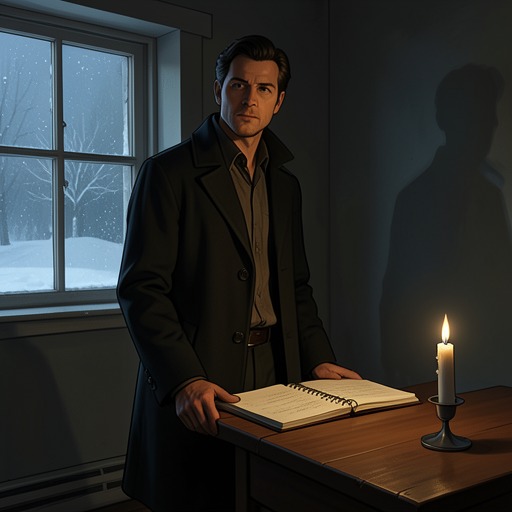
The coroner placed Wieder’s death at about 2 a.m. and concluded that he had died from internal and external blood loss caused by blows from a blunt object, probably The Baseball Bat Used to Murder Wieder. Investigators believed the assault had begun around midnight, with a single attacker approaching from behind while Wieder sat on the living-room couch. The first blow did not end the struggle: Wieder rose and tried to flee toward the window overlooking the lake, using his arms to defend himself. Both forearms were fractured. He then turned back to face his attacker in the middle of the room, and the television fell from its stand during the struggle.
The final blow struck Wieder near his left temple. He survived for roughly two hours, but the severe brain injury and cardiac arrest proved fatal. Because the fatal strike landed on the left side of his head, investigators inferred that the attacker was probably right-handed. This was a reconstruction of the attack, not an identification: it described the violence and its sequence without establishing who had delivered the blows.
Derek Simmons discovered the body the next morning. At 6:44 a.m. on 22 December, he called 911 from Joseph Wieder’s residence and reported finding the professor lying in a pool of blood in the living room. Paramedics could do nothing, and an assistant medical examiner formally pronounced Wieder dead. Simmons was the person who found the body, but his later status as a witness and potential suspect made that discovery part of the case’s uncertainty rather than a simple endpoint to the night’s events.
What the scene suggested—and did not
Simmons said the front door and the windows had been locked when he arrived, and investigators found no sign of forced entry. They therefore supposed that the killer had possessed keys, entered without breaking in, surprised Wieder, and locked the door on leaving. The murderer had also rummaged through the living room. Yet robbery appeared an unlikely explanation: Wieder still wore a Rolex and a valuable gemstone ring, about a hundred dollars remained in an unlocked drawer, and none of the valuable antiques had been taken. The search suggested that something had been sought, but the surviving evidence did not establish what it was.
Two recently used glasses in the living room indicated that Wieder had shared a drink with one other person that evening. He had consumed a significant quantity of alcohol; his blood-alcohol level was 0.11. The medical examiner found no narcotics or medication in his body. The glasses supported the presence of a companion, but did not name that person or prove the companion had remained until the attack.
The detectives also considered whether a romantic motive might explain the killing. At the time, however, Wieder was not known to have a partner or mistress, and friends and colleagues could not recall him dating anyone recently. They consequently considered a crime of passion unlikely. Later accounts raised the possibility of a relationship between Wieder and Laura Baines, but the possibility was never proven. The gap between what investigators could establish and what witnesses suspected became one of the case’s defining features.
The investigation and its suspects
Richard Flynn came under repeated scrutiny. He had worked in the Firestone Library and was hired to organize Wieder’s library using a computer system. Wieder gave him keys because the professor often travelled and Flynn sometimes worked at the house when he was away. Flynn had also been there socially: Wieder invited him to dinner on several occasions, and the two had shared meals. The keys and Flynn’s connection to the house made his presence there important to investigators, although access alone could not establish guilt.
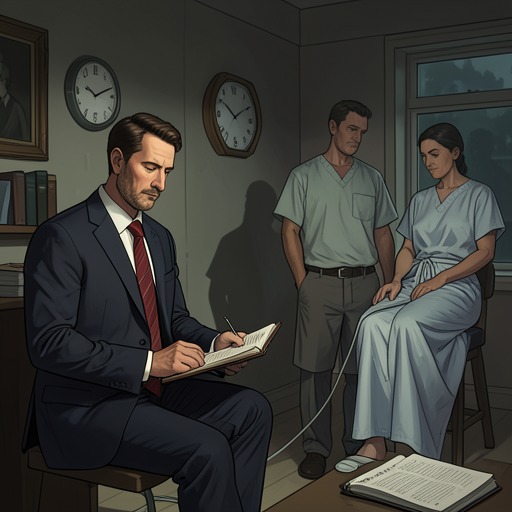
Flynn was interviewed repeatedly, but was never officially declared a suspect or charged. He hired an attorney, George Hawkins, who accused the police of harassment and argued that they were trying to make Flynn a scapegoat for their own incompetence. Press accounts described Flynn as a suspect for a time, after Simmons had been cleared on the strength of a strong alibi. The distinction between journalistic description and official action matters: Flynn faced sustained questioning, but the investigation did not produce a charge against him.
The inquiry also examined whether someone might have sought revenge over Wieder’s work as an expert witness in criminal cases. Detectives reviewed trials in which his testimony had harmed defendants, but that line of inquiry led nowhere. Nor did the prosecutors identify another viable lead. They ultimately did not accuse anyone of Wieder’s murder, and the West Windsor case became cold. Despite extensive investigation, the police never found the perpetrator.
Conflicting testimony and the limits of belief
Years later, Simmons told Keller that he knew who had killed Wieder and had tried to tell the police at the time. He believed his statement had been dismissed because he had previously been accused of murder, confined in a psychiatric institution, and treated with medication. In his view, those circumstances would have allowed others to portray him as delusional. His claim placed the problem of credibility at the centre of the case: a witness could insist that he had seen something clearly while anticipating that his history would make his account easy to discount.
Simmons’s later account implicated Flynn and raised the possibility that Laura had also been present. He said Flynn had argued with Wieder, and he suspected that Flynn had killed the professor while Laura was either an accomplice or a witness. Simmons also said that he had withheld Laura’s name from the police because he feared that publicity would tarnish Wieder’s reputation; he had reported only that Flynn was there and had argued with the professor. His suspicions about Laura and Wieder were not firsthand proof of a sexual relationship: Simmons said he had not seen them together sexually, though he believed Laura sometimes stayed overnight.
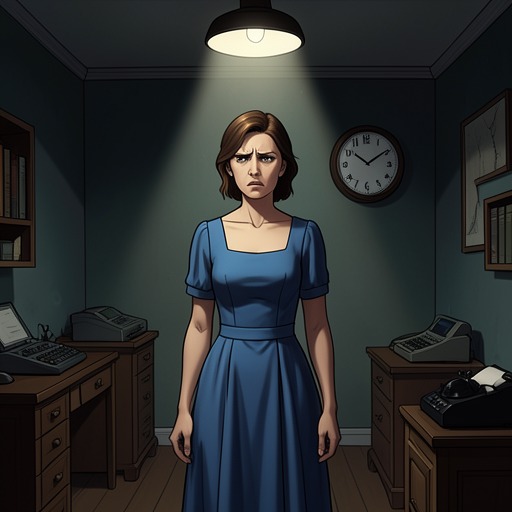
A former detective told Keller that the police had known about Laura and interviewed her. The detective recalled that the allegation that she was involved with Wieder could not be proved, and that she had a strong alibi for the evening. This account complicates the earlier impression that Laura’s name had been kept from investigators, without resolving whether her relationship with Wieder had any bearing on the killing. Simmons’s memory was itself questioned: the detective recalled him as ill and amnesiac, and doubted that his statement could be used as proof.
Simmons’s version also conflicted with Frank Spoel’s account. Spoel said he had hidden in the backyard that evening, but described Wieder with Flynn and recalled neither Laura’s presence nor an argument. When Keller confronted Simmons with the discrepancy, Simmons suggested that Spoel might have forgotten or might be lying. Neither possibility could settle the conflict. The accounts leave the reader with incompatible witness claims rather than a confirmed sequence of events.
An unresolved reconstruction
The murder remains unresolved even as its physical outline grows unusually precise: the approximate time of the attack, the likely point of entry, Wieder’s attempt to defend himself, and the fatal injury can all be reconstructed, while the identity and purpose of the attacker remain unknown. The locked doors suggest access by someone with keys; the glasses suggest a companion; the rummaged room hints at a search; none of these clues, separately or together, proves who killed Wieder or why.
For Keller, the investigation becomes a maze of details that refuse to form a single reliable picture. The case begins among the questions surrounding Flynn and his missing manuscript, but Wieder’s death draws other people, documents, and disputed recollections into the foreground. The result is not a solved mystery but a record of how incomplete evidence distributes suspicion: physical traces establish the violence, while memories and alibis pull the possible story in opposing directions.